

What Coin Blanks and Planchets Are — And Why They Cause Delays
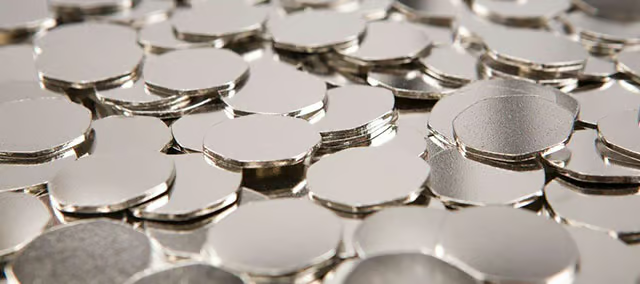
If you want to understand why coin releases get delayed, stop looking only at silver prices and start looking at blanks. For many coin programs, the blank or planchet is one of the biggest hidden constraints in the entire production chain. A mint can have metal, artwork, dies, packaging plans and strong customer demand, and still be unable to ship if suitable blanks are not available on time. The U.S. Mint says it buys blanks for pennies, numismatic coins and bullion coins, which immediately tells you that blank supply is often a dependency rather than a guaranteed in-house input.1
What is a coin blank?
A blank is a flat metal disc that will eventually become a coin. The U.S. Mint describes blanks as the flat discs produced before striking, and then explains that they go through further treatment before they are ready for coining. In other words, a blank is not yet a finished coin and not always a finished planchet either. It is an intermediate product.
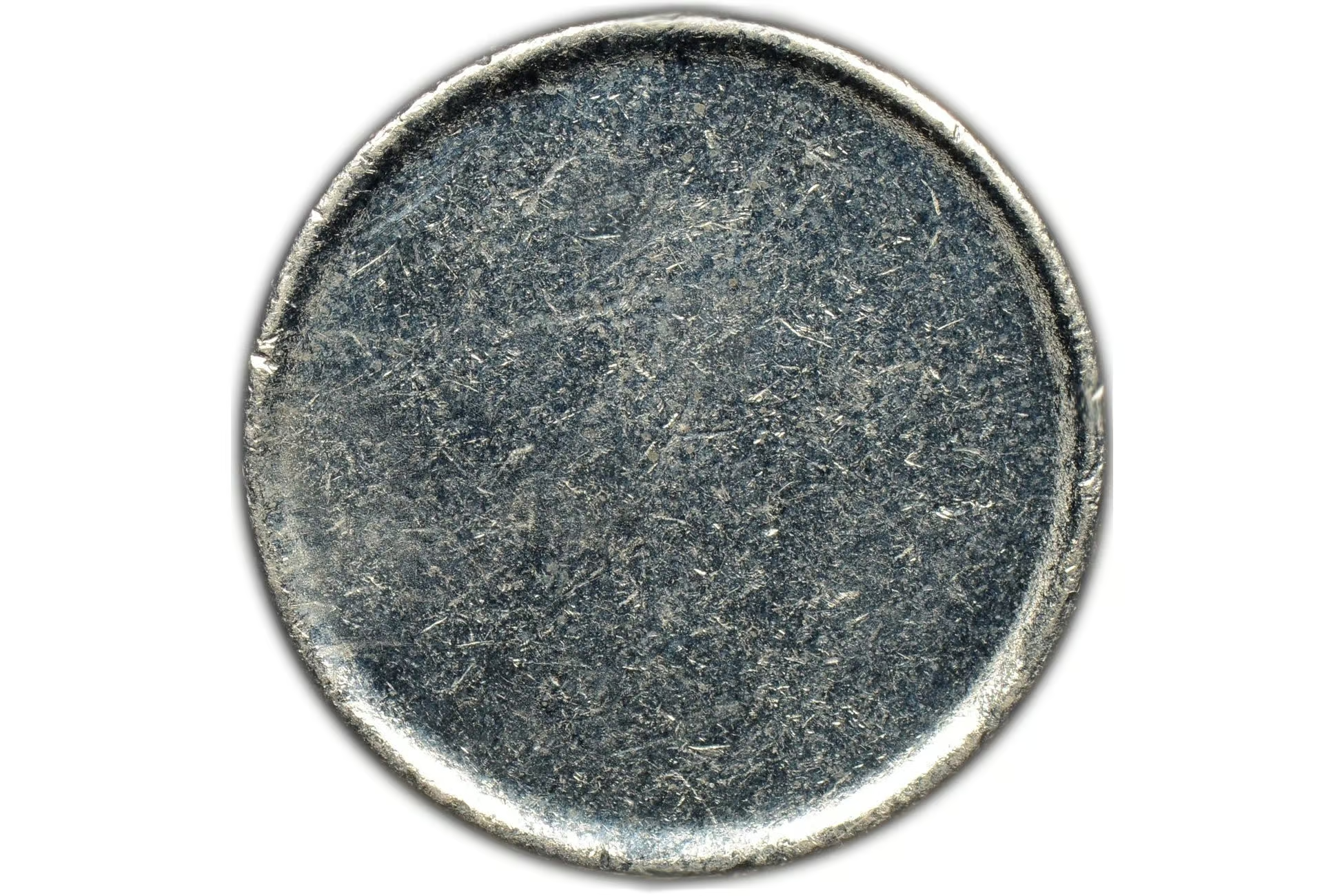
What is a planchet?
A planchet is effectively a blank that has been further processed and is ready for striking, the post-blanking stages are annealing, washing and upsetting before a blank is struck into a finished coin.
Why that distinction matters
People tend to talk about blanks and planchets as if they are interchangeable, but the distinction matters in production terms. A mint does not just need discs of metal. It needs discs that have been processed to the right softness, cleanliness, rim profile and dimensional tolerance so they can strike properly and consistently. If that preparation runs behind, the release runs behind.
What happens to a blank before striking?
The U.S. Mint says blanks are annealed in a furnace to soften the metal, washed to remove residue and then upset to create a raised rim before striking. Those steps are not cosmetic extras. They affect how the design transfers, how the coin wears, and whether the finished product meets quality standards.
The Perth Mint gives even more detail for precious-metal coining. It says blanks are burnished in spinning drums using stainless-steel shot and tumbling soap to smooth surfaces and remove blemishes. Some may also be acid-washed, ultrasonically cleaned or chemically pickled if weight needs to be brought into tolerance. That shows how much work sits between “metal exists” and “the press is ready to run.”2

Why blanks cause delays
The problem is not just whether blanks exist. It is whether the right blanks exist in the right quantity, at the right time, to the right standard. A bullion coin program may need relatively straightforward blanks, while a proof or premium release may need tighter finishing and more careful preparation. The U.S. Mint says proof coins use specially treated blanks and are struck multiple times, which makes premium issues more sensitive to blank quality and preparation delays.
Third-party dependence makes it worse
Because mints often buy blanks, they are exposed to external fabrication capacity. If a blank supplier is behind, the mint cannot simply wish the problem away. This is one reason a coin release can slip even when a mint otherwise appears ready. Blank supply sits between refining and coining, and if that bridge fails, the whole schedule moves with it.
Blanks are where wholesale silver becomes coin-ready input
This is the stage where a lot of people lose the thread. Refined silver in wholesale bar form is not automatically usable for coining. It still has to be converted into blanks or strip that meet the mint’s needs. LBMA Good Delivery rules define recognised wholesale silver bars, but those bars are still wholesale feedstock, not retail coin inputs. The blanking and planchet stage is what helps turn bulk metal into something a mint can actually strike.3
Why blank problems show up as retail frustration
Buyers do not see blank shortages directly. They see revised ETAs, products pushed back, or preorder windows extended. That is why blank supply is such an underappreciated issue. It is buried deep in the manufacturing chain, but when it tightens, the retail effect is immediate. The Perth Mint’s description of detailed blank finishing and the U.S. Mint’s description of purchased blanks and further processing both support the point that blank readiness is a real operational bottleneck, not a trivial detail.
Final thoughts
If refining is the stage that creates high-purity silver, blanks and planchets are the stage that turn that silver into something coin presses can actually use. That makes them one of the most important and least understood parts of the bullion and numismatic pipeline. When blanks run behind, coin releases run behind. It is that simple.