
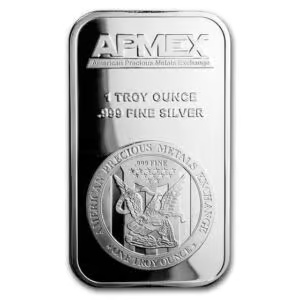

Comparing bullion prices is not as simple as finding the cheapest gold bar or silver coin on a dealer’s website. The real cost of physical bullion depends on the underlying metal value, the premium you pay above that value, the amount of metal you receive and what the bullion may be worth when you eventually sell it.
Understanding these figures makes it much easier to compare gold, silver and platinum bullion objectively and determine which products currently offer the strongest value.
Find the Lowest-Premium Bullion
Compare available gold, silver and platinum products using current metal values, total premiums and premium per ounce.
What Is the Spot Price of Gold or Silver?
The spot price is the current market price of a precious metal such as gold, silver or platinum. Precious metals are normally quoted internationally per troy ounce, although Australian bullion buyers commonly see pricing converted into Australian dollars per ounce, gram or kilogram.
One troy ounce is approximately 31.1035 grams, while one kilogram contains approximately 32.1507 troy ounces.
The spot price represents the value of the underlying metal. It does not represent the complete retail cost of producing and delivering a finished gold bar, silver coin or bullion round.
Why Australian bullion prices can move differently from US prices
International precious metal markets are commonly quoted in US dollars. Australian bullion, however, is bought and sold in Australian dollars.
This means the Australian-dollar value of gold or silver is influenced by both the international precious metal price and movements in the AUD/USD exchange rate.
Gold could therefore remain relatively stable in US-dollar terms while becoming more expensive to an Australian buyer if the Australian dollar weakens.
You can follow current and historical Australian-dollar precious metal pricing using our bullion price charts.
What Is a Bullion Premium?
A bullion premium is the amount paid above the intrinsic value of the precious metal contained in a product.
Imagine a silver bar contains $3,000 worth of silver at the current market price and is available for $3,150.
The $150 difference represents the amount being paid above the value of the physical silver itself.
What does the bullion premium pay for?
A physical bullion premium can reflect a combination of:
A higher premium does not necessarily mean a dealer is simply making a larger margin. Some bullion products genuinely cost substantially more to manufacture, source and distribute than others.
Premium Percentage vs Premium Per Ounce
There are several useful ways to measure a bullion premium. Each tells you something slightly different.
Premium in Dollars
The simplest calculation is the total dollar amount paid above metal value.
Premium Percentage
Shows the premium relative to the value of the underlying metal.
Premium Per Ounce
Particularly useful when comparing products with different total weights.
Why Premium Per Ounce Is So Useful
Premium per ounce allows bullion buyers to place differently sized products onto a common basis.
Consider two hypothetical silver products:
Silver Bar
$4.67 premium per ounceSilver Coin
$10.00 premium per ounceIf the objective is simply to obtain the greatest possible amount of silver for a given amount of money, the kilogram bar provides more metal for each dollar spent.
That does not automatically make the kilogram bar the right product for every buyer. Individual one-ounce products provide considerably greater divisibility.
Larger products often provide lower premiums. Smaller products generally provide greater flexibility when selling only part of a holding.
Why Larger Bullion Bars Usually Have Lower Premiums
Producing one large bullion bar is generally more efficient on a per-ounce basis than producing many separate smaller products containing the same total quantity of metal.
Each individual product may require manufacturing, handling, quality control, packaging and distribution regardless of its weight. With a larger bar, these costs are spread across substantially more precious metal.
Greater divisibility
Lower divisibility
The trade-off is that larger bullion bars require more capital per unit and may be less convenient if the owner later wants to liquidate only a small portion of their holding.
Silver Bars vs Silver Coins vs Silver Rounds
The format of a bullion product can materially affect the premium you pay.
Silver Bars
Often selected by buyers seeking straightforward exposure to physical silver and relatively low premiums, particularly in larger cast formats.
Strong value per ounceSilver Coins
Sovereign bullion coins can provide strong recognition, detailed finishes and convenient one-ounce divisibility, although they may attract higher manufacturing premiums.
Recognition & divisibilitySilver Rounds
Private-mint rounds can provide a useful middle ground: small and divisible like coins while sometimes trading at lower premiums.
Flexible middle groundDoes the Mint or Brand Matter?
It can, although how much it matters depends on what the buyer wants from the product.
Recognised bullion producers have established markets for their products and may incorporate distinctive packaging, designs, anti-counterfeit features or manufacturing standards.
Some buyers are willing to pay more for a particular brand. Others are primarily interested in obtaining the greatest weight of investment-grade precious metal at the lowest possible premium.
“Am I paying this additional premium because it provides something I actually value?”
If two products contain the same weight and purity of precious metal but one costs substantially more, consider what the additional premium is actually buying.
- Brand recognition
- Premium packaging
- Security or authentication features
- Limited or distinctive designs
- Demand in a particular resale market
- Collectable appeal
There is nothing inherently wrong with paying a higher premium. The important part is understanding why the premium exists.
The Cheapest Bullion Is Not Always the Lowest-Priced Product
A product’s total price can be misleading when products contain different amounts of metal.
The one-ounce round costs less in total dollars, but the 10oz bar costs less for each ounce of silver.
Buying ten individual rounds at $102 each would cost $1,020, compared with $980 for the ten-ounce bar.
This is why price per ounce and premium per ounce are usually more informative than simply comparing the headline product price.
What Is the Buyback Spread?
Purchase price is only one side of a bullion transaction. The other side is the price at which that bullion can be sold.
A bullion dealer may sell a product above spot and purchase bullion at spot, below spot or, in certain market conditions and for particular products, above spot.
The difference between the buying and selling sides of the market is commonly referred to as the spread.
In this hypothetical example, silver spot remains at $100 per ounce. The product is purchased for $107 and could immediately be sold for $99.
The difference between the two prices is $8 per ounce.
This is why it can be useful to consider both the purchase premium and the dealer’s buyback methodology.
The Coin Chest publishes current bullion purchasing information on our Sell Bullion page.
What Is the Round-Trip Cost of Bullion?
Another way to evaluate bullion is to consider the difference between buying a product and immediately selling equivalent bullion back under the same market conditions.
The round-trip cost combines the effect of the purchase premium and the buyback spread.
For someone primarily interested in precious metal exposure, this can provide a more complete picture than simply choosing the product with the lowest sticker price.
How to Compare Two Bullion Products Properly
Suppose you are deciding between two hypothetical silver products.
1kg Silver Bar
- Metal value
- $3,000
- Purchase price
- $3,150
- Premium
- $150
- Premium %
- 5%
- Premium / oz
- $4.67
10oz Silver Bar
- Metal value
- $933.11
- Purchase price
- $1,003.11
- Premium
- $70
- Premium %
- 7.5%
- Premium / oz
- $7.00
Product B has the smaller total premium because it contains much less silver. Product A, however, has the lower percentage premium and premium per ounce.
If the objective is purely to maximise silver weight for the amount spent, Product A provides more metal per dollar. If smaller units and greater divisibility are important, Product B may still be preferable.
Compare Bullion by the Amount of Metal You Actually Receive
Another useful approach is to reverse the usual question.
“How much does this bullion bar cost?”
Ask: “How many ounces of precious metal am I receiving for my money?”Someone allocating $10,000 to physical silver, for example, could compare:
- 1kgcast bars
- 20ozbars
- 10ozbars
- 5ozbars
- 1ozrounds
- 1ozbullion coins
The best-value product can change depending on wholesale supply, dealer inventory, promotions and current demand. No single mint, brand or product size is guaranteed to always have the lowest premium.
Why Bullion Premiums Change
Unlike the international spot price, physical bullion premiums are not determined by one central market.
Premiums can expand or contract according to conditions in the physical bullion market.
A dealer that acquires a large quantity of one particular bullion product may be able to offer it at a substantially lower premium than another product containing exactly the same amount of precious metal.
This is why comparing current premiums is usually more useful than assuming one brand or mint will always be cheapest.
Should You Always Buy the Lowest-Premium Bullion?
Not necessarily.
Premium is an important metric, but it is not the only factor that may matter to a bullion buyer.
Lower Premium May Suit Buyers Seeking
- Maximum metal weight
- Lower acquisition cost
- Simple bullion exposure
- Long-term metal holdings
Higher Premium May Provide
- Smaller divisible units
- Preferred mint or refinery
- Security features
- Collectable characteristics
The distinction is particularly important when comparing standard bullion with numismatic or collectable precious-metal products.
A limited-mintage coin may deliberately be purchased for its design, rarity or collectability. Comparing that product solely on its premium per ounce misses the reason the product exists.
Don’t Forget Shipping and Transaction Costs
When comparing bullion dealers, consider the final amount payable, not only the advertised price of the product.
Depending on the transaction, additional costs can include:
- Shipping
- Transit insurance
- Payment surcharges
- Storage
- Collection costs
- Taxes or duties where applicable
This becomes particularly important when purchasing small quantities because fixed transaction costs represent a much larger percentage of a smaller order.
Why Silver Premiums Are Often Higher Than Gold Premiums
Gold commonly trades at a lower percentage premium than silver, particularly in larger standard bullion formats.
This does not mean gold is cheaper in absolute terms.
Manufacturing, packaging, transport and distribution costs represent a smaller percentage of the value of a high-value gold product than they do for a lower-value silver product.
Gold and silver premium percentages should generally be compared within their own metal rather than assuming a 3% gold premium and a 7% silver premium are directly equivalent.
How to Find the Lowest-Premium Bullion in Australia
Calculating metal values and premiums manually across dozens of products is possible, but rapidly becomes impractical as precious-metal prices and inventory change.
The Coin Chest’s Lowest Premium Bullion tool automatically compares available gold, silver and platinum products against current metal values.
- Total premium over metal value
- Premium per ounce
- Current product price
- Price per ounce
- Product weight
- Availability
- Expected arrival information
- Quantity discounts where available
How Much Will a Bullion Dealer Pay When You Sell?
If you are comparing bullion based on cost, it makes sense to understand the other side of the transaction before purchasing.
Buyback pricing can vary depending on factors such as:
The Coin Chest publishes current purchasing information for investment-grade bullion so customers can understand how eligible gold and silver products are valued when selling to us.
Quick Bullion Price Comparison Checklist
-
1
Metal Value
What is the precious metal itself currently worth?
-
2
Product Price
What is the final product price you will actually pay?
-
3
Total Premium
How many dollars are being paid above metal value?
-
4
Premium Percentage
What percentage above metal value is being paid?
-
5
Premium Per Ounce
Especially important when comparing products with different weights.
-
6
Price Per Ounce
What is the effective cost for each ounce of precious metal?
-
7
Buyback Value
What would the bullion currently be worth if sold?
-
8
Divisibility
Could you sell only part of the holding if required?
-
9
Additional Costs
Consider shipping, payment costs, insurance and storage.
-
10
Availability
Is the product available now, or are you willing to wait for a lower-premium option?
Bullion Price & Premium FAQs
What is a good premium over spot for gold?
There is no fixed percentage that is always considered a good gold premium. Premiums vary according to product size, mint, fabrication method, wholesale supply and market conditions. Comparing similar products available at the same time is generally more useful than relying on one fixed percentage.
What is a good premium over spot for silver?
Silver premiums can vary considerably between product formats and market conditions. Larger cast bars often carry lower premiums per ounce than smaller minted products, while one-ounce products offer greater divisibility. Comparing current premium per ounce provides a useful starting point.
Why can’t I buy physical gold or silver at spot price?
Spot represents the underlying market value of the precious metal rather than the complete cost of producing and distributing a finished retail bullion product. Physical bullion normally incorporates costs associated with refining, fabrication, minting, logistics and distribution.
What does premium over spot mean?
Premium over spot is the difference between the value of the precious metal contained in a bullion product and the price paid for the finished product.
Are larger silver bars cheaper?
Larger silver bars often carry a lower premium per ounce because manufacturing and distribution costs are spread across more silver. This is not universal, however, because wholesale supply and current dealer inventory can temporarily make smaller products highly competitive.
Are silver bars cheaper than silver coins?
Standard silver bars often carry lower premiums than sovereign bullion coins, particularly in larger weights. Dealer inventory, wholesale supply and promotions can nevertheless make particular coins or rounds competitive at different times.
What is the cheapest way to buy silver bullion?
If cheapest means acquiring the greatest quantity of silver for the money spent, compare products using their effective premium per ounce and final transaction cost. Larger bars frequently perform well using this measure, but the lowest-premium product can change.
What is the cheapest way to buy gold bullion?
Standard investment-grade gold bars generally provide strong value compared with highly finished or collectable products. Larger bars can reduce the premium per gram or ounce, while smaller bars provide greater divisibility.
Does bullion brand matter when selling?
Brand can matter depending on the product, dealer and resale market. Recognised products can be easier to identify and trade, although paying a higher purchase premium does not automatically guarantee an equivalent premium when selling.
What is the difference between spot price and bullion price?
Spot price represents the underlying value of the precious metal. Bullion price is the price of the finished physical product and generally includes a premium above its metal value.
How do I compare gold and silver bullion prices?
Compare the underlying metal value, premium percentage, premium per ounce, effective price per ounce and potential buyback value. Premium per ounce is particularly useful when comparing bullion products of different sizes.
Compare Before You Buy
The best-value bullion product can change as precious-metal prices, wholesale costs, inventory and availability move.
The question isn’t simply “Which product is cheapest?”
It’s “How much precious metal am I receiving for every dollar I spend?”