
1977 Australian 50 Cent Coin (Silver Jubilee): Value, Variations, and Collecting Guide
For many numismatists and casual collectors alike, discovering a 1977 50 cent coin at the bottom of a change jar is a nostalgic delight. Issued to celebrate the 25th anniversary of Her Majesty Queen Elizabeth II’s accession to the throne, this iconic jubilee 50 cent coin remains a highly popular piece of Australian numismatic history.
If you have ever stumbled across an australian 50 cent coin 1977 and wondered about its background or worth, you are certainly not alone. This comprehensive guide delves into everything from its unique aesthetic elements to its modern-day market worth, offering actionable advice for both fledgling and veteran collectors.
The Story Behind the Design
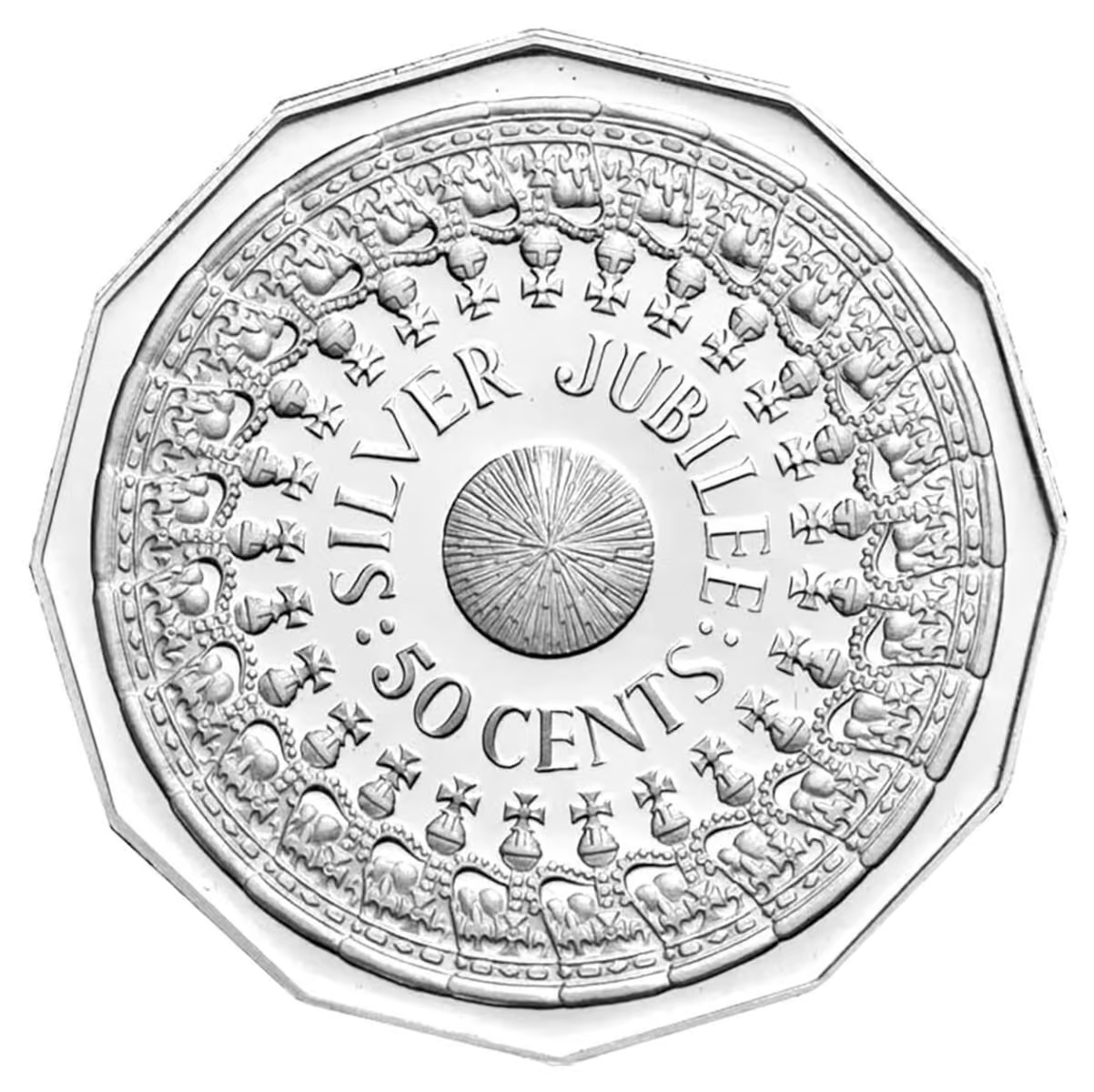
In 1977, the Royal Australian Mint released this special edition coin to mark a monumental royal milestone. The striking twelve-sided (dodecagonal) shape of the 50-cent piece made it the perfect canvas for a commemorative design.
Obverse and Reverse Highlights
When examining the Queen Elizabeth II Silver Jubilee design features, one immediately notices the dignified artistry. The obverse features the traditional effigy of the Queen. The Arnold Machin obverse portrait characteristics include a graceful, youthful profile of Her Majesty wearing the famous Girls of Great Britain and Ireland Tiara, complete with elegant drapery at the neckline.
On the reverse, crafted by the renowned Stuart Devlin, the coin showcases a beautiful, radiating central crown motif surrounded by intricate floral emblems representing the Australian states. When comparing 1977 Jubilee vs standard coat of arms designs, the Jubilee edition stands out for its bold, symmetrical celebration of the monarchy, offering a stark visual contrast to the familiar kangaroo and emu layout.
It is also crucial to understand the metal makeup of this piece. Novice collectors often wonder about cupro-nickel versus silver coin composition. Despite the name “Silver Jubilee”, the standard circulating 1977 50 cent coin contains absolutely no precious silver. Instead, it is struck from a highly durable cupro-nickel alloy, comprising 75% copper and 25% nickel.
Mintage Numbers and Rarity
For those wondering how to identify rare decimal currency, the first step is always evaluating the official production numbers. The mintage figures for 1977 dodecagonal issues are historically quite high. The Royal Australian Mint produced approximately 25 million of these commemorative pieces for general circulation.
Because of this massive production run, a standard, heavily circulated coin is relatively common today. However, high mintage does not mean your collection is devoid of value. Rarity in the modern coin market is often dictated not just by how many were made, but by how many have survived in flawless condition.
Analysing the Value: What is Your Coin Worth?
So, what is the exact 1977 50 cent coin value? A frequently asked question on numismatic forums is, “Are commemorative 50c pieces worth money?” The short answer is yes, but it depends entirely on the condition and strike type. Let us break down the market value of 1977 decimal issues.
- Circulated Condition: For coins that have seen decades of everyday use, the 1977 fifty cent piece value generally sits at face value or slightly above, usually fetching between $0.50 and $2.00.
- Uncirculated Condition: If your coin was taken straight from a mint roll and has never touched a cash register, the silver jubilee 50 cent coin value increases. A brilliant uncirculated (BU) piece can easily fetch anywhere from $5 to $15 or more.
- Proof Versions: The Australian Silver Jubilee 50c value spikes significantly for proof coins. Understanding the difference between proof and circulation strikes is vital here. Proof coins were struck multiple times using specially polished dies, resulting in frosted designs set against a flawless, mirror-like background. A pristine proof example from a 1977 mint set can command $30 to $50.
Consulting a reliable price guide for Australian commemorative issues is always recommended, as the 1977 50 cent piece value and the broader 1977 50 cent coin australia value can fluctuate based on collector demand and market trends. Ultimately, the jubilee 50 cent coin value is inextricably tied to its visual appeal and structural integrity.
Spotting Errors and Unique Variations
While standard strikes are relatively common, error coins are where the real excitement—and financial reward—lies. Common minting errors on 1977 currency include off-centre strikes, clipped planchets, and die cracks.
Occasionally, collectors stumble upon coins struck with the wrong metal planchet or featuring a prominent double strike. If you find a Jubilee 50c with missing design elements or a noticeable misprint, its value could skyrocket into the hundreds of dollars. Always inspect both sides of your coins under a magnifying loupe to catch these lucrative imperfections.
How to Grade and Protect Your Collection
To maximise your numismatic investment, preserving the condition of your coins is paramount. Utilising a grading guide for uncirculated Australian coins helps you accurately assess your holdings. You should look for:
- Mint Lustre: The original, cartwheel-like shine on the coin’s surface.
- Strike Detail: Sharp, crisp lines, particularly on the highest points of the crown and the Queen’s tiara.
- Surface Preservation: An absence of contact marks, bag marks, or deep scratches.
Equally important is preserving coins to prevent oxidation. Cupro-nickel coins are highly prone to tarnishing, developing a dull, greyish or even greenish hue (verdigris) if exposed to high humidity or the oils from human skin.
Top Preservation Tips:
- Always handle your uncirculated and proof coins by their edges, ideally whilst wearing soft cotton gloves.
- Store your collection in acid-free, PVC-free Mylar flips or premium acrylic capsules. PVC can leach chemicals over time, permanently damaging the coin’s surface.
- Keep your albums in a cool, dry environment, and consider adding silica gel packets to your storage safe to control ambient moisture.
Cashing In on Your Collection
Once you have identified, graded, and securely stored your pieces, you might decide it is time to sell. Knowing exactly where to sell vintage numismatic collections ensures you receive a fair, market-accurate price.
- Coin Dealers and Auction Houses: Professional, accredited numismatic dealers offer immediate payment and expert appraisals. If you have a highly-graded proof or a verified, dramatic error coin, consigning to an established auction house is often your most profitable route.
- Online Marketplaces: Platforms such as eBay or specialised numismatic community groups on Facebook are excellent for selling standard uncirculated pieces directly to other collectors. Just ensure you take clear, well-lit photographs and provide an honest, detailed description of the coin’s condition to build trust with buyers.
Final Thoughts
The 1977 50 cent coin is much more than mere pocket change; it is a tangible, beautifully crafted piece of the British Commonwealth’s vibrant history. While a standard circulated piece might not fund your early retirement, top-tier uncirculated examples, mirror-finish proof strikes, and rare minting errors hold notable financial and historical appeal.
By understanding exactly what to look for, preserving your items correctly, and staying up-to-date with current market dynamics, you can truly appreciate the lasting numismatic joy this iconic dodecagonal coin brings to your collection.