

Australian Coin Weights: 5c, 20c, 50c and More
Have you ever held a handful of change and wondered about the exact weight of coins australia produces? Whether you are a dedicated numismatist, a retail manager cashing up a busy register, or just someone preparing to take a heavy piggy bank to the teller, understanding australian coin weights is surprisingly practical.
From verifying bullion to simply skipping the tedious process of counting shrapnel by hand, knowing the mass of our currency is a valuable skill. In this guide, we will break down the official weights, dimensions, and metal compositions of Australia’s circulating coins, and explore why these precise measurements matter.
Australian coin weights (easy-to-read cheat sheet)
This table is designed for everyday readers: it keeps the wording short, puts the numbers up front, and uses recognisable features so you can quickly match the coin in your hand.
| Coin | Recognise it by (reverse) | Weight | Size | Metal Composition |
|---|---|---|---|---|
| 5c | 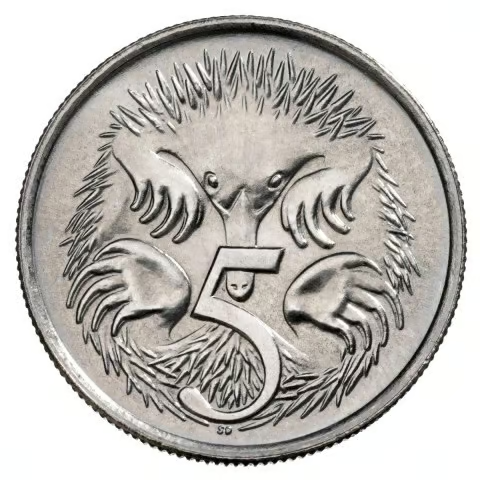 | 2.83 g | 19.41 mm diameter | Cupro-nickel (75% copper, 25% nickel) |
| 10c | 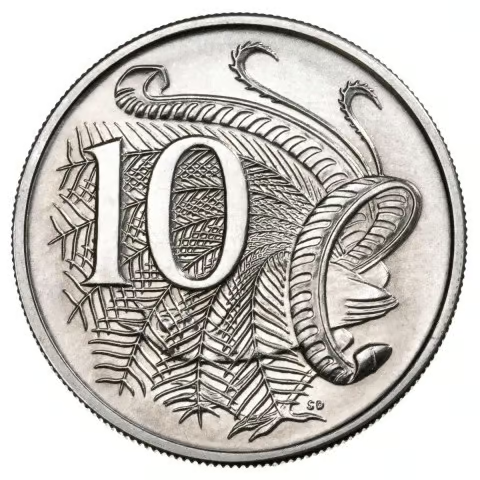 | 5.65 g | 23.60 mm diameter | Cupro-nickel (75% copper, 25% nickel) |
| 20c | 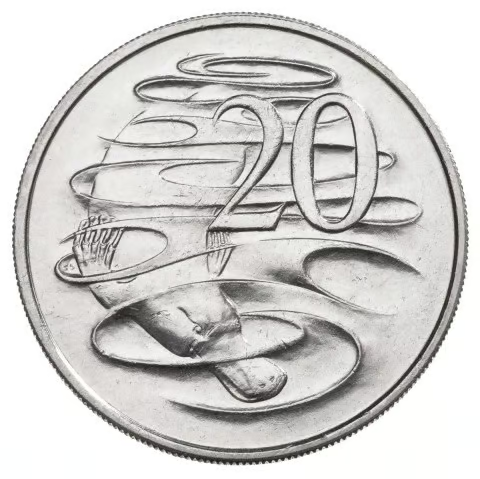 | 11.30 g | 28.65 mm diameter | Cupro-nickel (75% copper, 25% nickel) |
| 50c (current) | 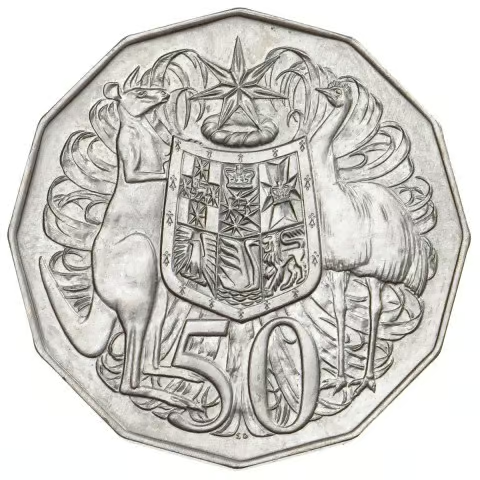 | 15.55 g | 31.65 mm across flats | Cupro-nickel (75% copper, 25% nickel) |
| $1 | 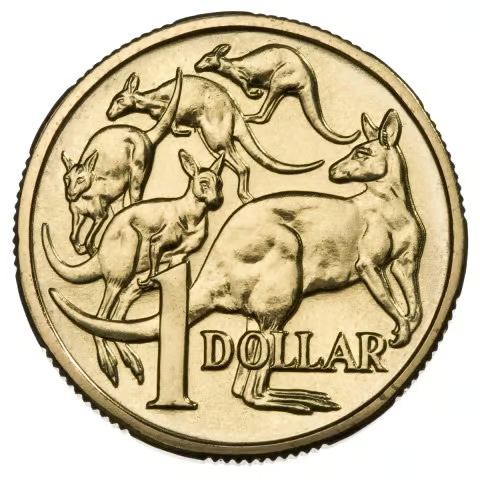 | 9.00 g | 25.00 mm diameter | Aluminium bronze (92% copper, 6% aluminium, 2% nickel) |
| $2 | 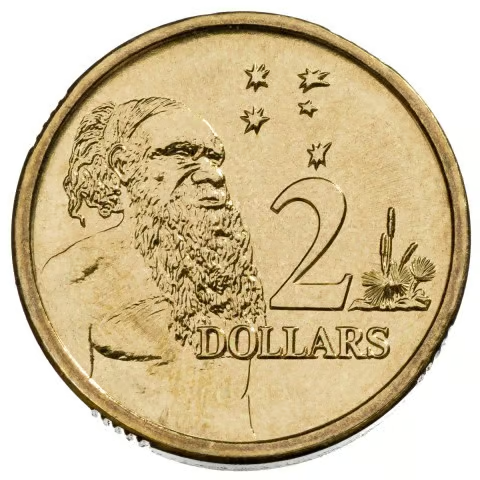 | 6.60 g | 20.50 mm diameter | Aluminium bronze (92% copper, 6% aluminium, 2% nickel) |
Shop Australian Coins by Denomination
Looking for a specific Australian coin denomination? The Coin Chest stocks a range of 5c, 10c, 20c, 50c, $1 and $2 coins, sorted into easy-to-browse denomination categories for collectors.
Australian coin weights and dimensions (quick answers)
- How much does a 5 cent coin weigh? 2.83 g (the official 5 cent coin weight / 5 cent piece weight).
- How much does a 20 cent coin weigh? 11.30 g (the official weight of a 20 cent coin / 20 cent piece weight / how much does a 20c coin weigh).
- How much does 50 cent coin weigh? 15.55 g for the current dodecagonal coin.
50 cent coin: 1966 silver vs the current coin (simple comparison)
The Australian 50 cent coin has changed significantly since decimal currency was introduced. The original 50c coin was released in 1966 only and was a round coin made from 80% silver and 20% copper, weighing 13.28 grams and measuring 31.65 mm in diameter. It was quickly withdrawn from regular production because rising silver prices made the metal value too high for everyday circulation. Its round shape also made it easier to confuse with the 20 cent coin. In 1969, the Royal Australian Mint introduced the current 50c coin, which is still used today. This newer version is made from 75% copper and 25% nickel, weighs 15.55 grams, and has a distinctive 12-sided shape measuring 31.65 mm across the flats. The change made the coin cheaper to produce, easier to recognise, and more practical for daily use.
What is the heaviest Australian circulation coin?
If you are wondering what is the heaviest Australian circulation coin, the crown goes to the iconic dodecagonal (12-sided) 50-cent piece. At 15.55 grams, carrying a few of these in your pocket adds up quickly! Its unique shape and heavy mass were introduced in 1969 to help the visually impaired easily distinguish it from the round 20-cent coin, and it has remained a staple of Australian currency ever since.
The practicality of bulk coin weighing
For retail workers and bank tellers, weighing coins for bank deposit calculation is a massive time-saver. Rather than counting hundreds of coins individually, they rely on mass. But how much do Australian coins weigh in bulk?
Because the 5c, 10c, and 20c coins were designed with proportional weights, the math is beautiful: $10 worth of any combination of these three coins will always weigh exactly 565 grams.
To streamline end-of-day banking, most businesses use a bulk coin weight to value conversion chart. Here is a quick reference for standard bank bags:
- $50 in 50c coins (100 coins) = 1,555 grams (1.55 kg)
- $100 in $1 coins (100 coins) = 900 grams
- $100 in $2 coins (50 coins) = 330 grams
However, there is a slight caveat. Older coins that have been circulating for decades might be ever-so-slightly lighter. Measuring coin wear and tear mass loss is a real numismatic study; years of friction in pockets and registers can shave a tiny fraction of a gram off a coin’s original mass. While rarely enough to throw off a modern commercial scale, it is a fascinating reality of physical money.
Beyond everyday change: pre-decimal, bullion, and counterfeits
The weight of coins australia produces isn’t just about modern pocket change. History, investment, and security all rely heavily on strict coin masses.
History in your hands
Before the switch to decimal currency in 1966, Australia used pounds, shillings, and pence. The silver content of pre-decimal Australian currency means these older coins—like the florin, shilling, and pre-1946 threepence—hold intrinsic precious metal value. When comparing weight of old vs new Australian currency, older silver coins have entirely different mass profiles and densities compared to our modern cupro-nickel variants.
Bullion and gold
For precious metal investors, weight is quite literally money. The Perth Mint produces world-renowned legal tender bullion. If you were trying to calculate the total weight of 100 dollars in gold coins (referring to $100 face-value legal tender gold bullion, such as the 1 oz Australian Kangaroo), the math is precise: 1 troy ounce equals 31.103 grams (we made a post about this if you need help with conversion). Of course, the actual market value of one ounce of pure gold is thousands of dollars, far exceeding its $100 face value! Investors frequently test the specific gravity of Australian bullion coins to verify their authenticity and ensure they aren’t buying gold-plated tungsten fakes.
Security and fraud prevention
Speaking of fakes, precise coin weights act as a frontline defense against fraud. Banks and vending machine sensors are calibrated for identifying counterfeit Australian coins by density and weight. A counterfeit $2 coin cast from cheap lead or zinc alloys will not match the official weight and specific electromagnetic signature of genuine coins. The strict adherence to standard weights keeps our economy secure.
Final thoughts
From the humble 2.83-gram 5-cent piece to the hefty 15.55-gram 50-cent coin, the weight of coins australia relies on is a masterclass in precision engineering. Whether you are balancing a cash drawer, banking your saved-up change, or collecting historical silver pieces, knowing these exact measurements puts the true value of Australian currency right in the palm of your hand.